

AI Solutions for SaaS & Technology
See churn 30 days out. Ship faster. Put AI in the product.
- Reduction in Customer Churn
- 20–35%Reduction in Customer Churn
- Faster Development Cycles
- 30–50%Faster Development Cycles
- Reduction in Support Volume
- 40–60%Reduction in Support Volume
- Accuracy in Churn Prediction
- 90%+Accuracy in Churn Prediction
Industry Challenge
Winning a new account costs more each year. Support load grows as the base grows. Churn is spotted late, and every board now asks what AI is doing inside the product itself.
AI Opportunities
- Spot churn 30 to 90 days ahead of renewal
- Answer tier one tickets without a person
- Ship code faster with AI in the toolchain
- Put search, chat and drafting into your product
- Rank accounts by the room they have to grow
Our AI Solutions
Churn Prediction
Name the accounts at risk, and the reason for each.
Support Deflection
Answer the common tickets and pass the rest with context.
In-Product AI Features
Search, chat and drafting inside your own product.
Expansion Scoring
Find the accounts whose usage says they need more.
Product Analytics
See what users do, and whether the new feature landed.
Anomaly & Incident Detection
Catch a broken flow before the first ticket arrives.
Top AI Applications
- Churn Prediction & Prevention
- AI Support Assistant
- Usage-Based Expansion Scoring
- In-Product Copilot
- Semantic Product Search
- Anomaly Detection
- Lead Scoring & Routing
- Automated Release Notes
Why SaaS & Technology Is Ready for AI
SaaS firms hold the richest behaviour data of any sector and still react late. Churn is visible in product use weeks before the renewal: sessions thin out, features go quiet, tickets rise. Most teams still find out at the invoice.
The second opening is the product itself. AI features are now expected rather than a difference worth paying for. Building that skill in-house means hiring people most product teams do not have yet.
What We Need From You
You almost certainly have most of this already. Gaps are workable — they change the sequence, not the feasibility.
- Product events at account and user level
- Subscription, billing and renewal history
- Ticket volume, topics and time to resolve
- Onboarding steps and time to first value
- Churn outcomes with the reason where you captured it
How an Engagement Runs
- 1
Define health honestly
We work out which signals really precede churn in your data, rather than importing somebody else's health score formula.
- 2
Predict with lead time
Models target a 30 to 90 day window. That is far enough ahead for your CSM team to act and close enough to be reliable.
- 3
Route to action
Scores land in the tools your CS team already works in, with the reason attached. A number with no cause produces no action.
- 4
Build in-product AI
Where the roadmap asks for it, we embed search, chat or drafting, with an evaluation harness so quality is measured rather than assumed.
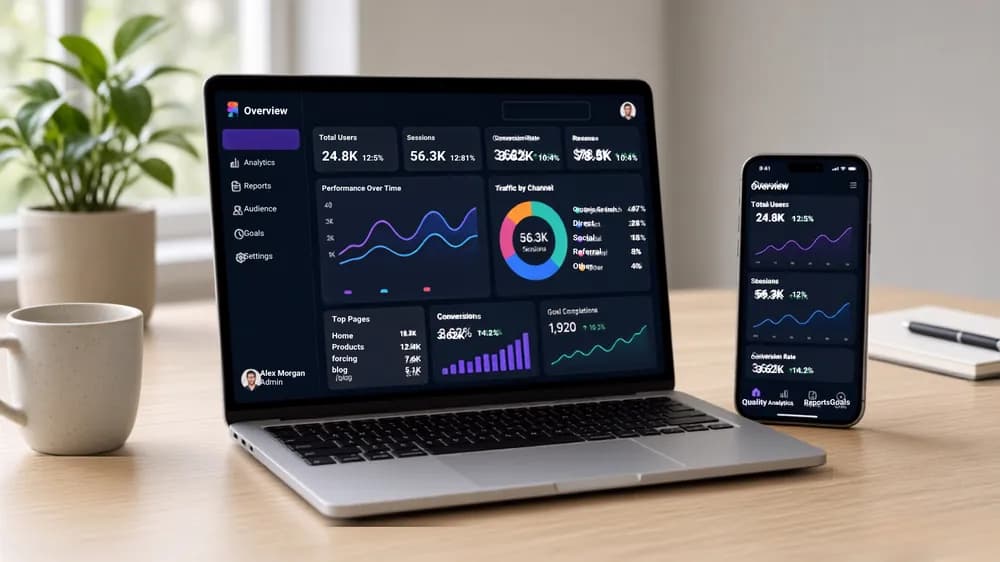
B2B SaaS Platform
Challenge
Churn was seen at renewal, which left the CSM team no time to act.
Our Solution
We built a health score from usage, tickets and billing, shown inside the app.
- Reduction in Churn
- 27%Reduction in Churn
- Reduction in Support Tickets
- 41%Reduction in Support Tickets
- Increase in Expansion Revenue
- 19%Increase in Expansion Revenue
Expected Impact
Net Revenue Retention
Keep more accounts, and grow the ones you keep.
Faster Delivery
Features and fixes reach users in less time.
Lower Cost to Serve
Serve more accounts with the same support team.
Differentiated Product
AI features your rivals have not shipped yet.
Product Intelligence
Decide from what users do, not from the loudest opinion.
SaaS & Technology AI — Common Questions
Usually 30 to 90 days. That is the window that matters. Far enough ahead for your CSM team to act, close enough that the signal still holds. A churn call at renewal is accurate and useless.
Yes, and that is most of this work. Search, chat and drafting inside your product, with an evaluation harness so you can check quality rather than hope for it.
It clears the repeat tier one volume: password resets, how-do-I questions, status checks. The rest is passed on with full context. The aim is fewer tickets reaching a person, not fewer people.
By grounding answers in your own docs and data, limiting what the model may assert, and testing against a fixed set. Ungrounded text on a product screen turns into a support ticket.
Ready to Build AI Into Your Product?
Send us 12 months of usage and churn data. We will tell you how early it shows.
Book a Free Consultation